Also known as
E-Cigs, Vapes, Vape pens, Tanks, Mods, Pod-Mods, Electric nicotine delivery systems (ENDS), cigalikes, cigarettes, cigs, hookah, liquidspuff, barsvape, pensvape, podsvape, sticks
Classification
Legal
Overview
Electronic cigarettes (e-cigarettes), also known as ‘vapes’ are devices that enable the user to inhale nicotine. They work by heating and vapourising a solution that contains nicotine, glycerine and sometimes flavourings. Inhaling nicotine from one of these devices is referred to as vaping.
Since vaping involves no burning, there is no smoke produced and hence no tar or carbon monoxide, which are two of the most toxiccapable of causing injury or death products of smoking. The vapour from e-cigarettes has been found to contain some potentially harmful chemicals but these are at much lower levels than they are in conventional tobacco smoke. The Evidence review of e-cigarettes and heated tobacco products 2018: executive summary from Public Health England tells us that one assessment concluded that the cancer potency’s of e-cigarettes were largely under 0.5% of the risk of smoking. But there have been some studies with adolescents suggesting respiratory symptoms among e-cigarette experimenters.
While there are some public health concerns over the uptake of e-cigarettes by non-smokers, many doctors believe that they can help smokers quit or reduce their tobacco consumption. In fact, they may begin to be prescribed on the NHS to help people stop smoking. In 2021, Australia made it illegal to possess and use nicotine vaping products without a prescription 1.
Vaping devices are battery-operated devices that people use to inhale an aerosol, which usually contains nicotine, as well as flavourings and other chemicals. They may look like traditional tobacco cigarettes, cigars, pipes, or even everyday items like pens or USB memory sticks. Other devices, such as those with refillable tanks, may look different 2, 3.
Nicotine vapes are electronic devices designed to allow people to inhale nicotine in a vapour instead of the smoke that results from burning tobacco. Vapes sold illegally may contain other drugs. Vapes are also available without nicotine (or other drugs).
Substances found within cannabis such as CBDcannibidiol More (legal) or THCTHC, or tetrahydrocannabinol, is the chemical responsible for most of marijuana's psychological effects (illegal) might also be sold as ready-made vapes or vape juices. These may resemble e-cigarettes and nicotine vaping devices. They may claim to contain cannabis chemicals like CBDcannibidiol More and THCTHC, or tetrahydrocannabinol, is the chemical responsible for most of marijuana's psychological effects but may instead contain synthetic cannabinoids (Spice). In some cases, such illicit vapes have also been found to contain other drugs such as ketamine. Very little is known about the health impact of vaping cannabis chemicals or other drugs 4.
Vaping is inhaling water vapour from an electronic cigarette (e-cigarette). You’re inhaling the smoke from burning tobacco when you smoke a cigarette. Vaping uses a battery-powered heating element to turn liquid into a vapour, which you then inhale and exhale like smoke.
Also known as e-cigarettes, they essentially heat liquids, usually containing nicotine, propylene glycol, and flavourings, to create vapours which are then inhaled.
Some people claim that vaping has helped them quit smoking and improve their health; others claim that vaping may cause cancer and other long-term illnesses 5
According to the CDC, the use of disposable vape devices has skyrocketed by an alarming 1,000% among high-school students and 400% among middle schoolers since 2019. This raises significant concerns about youth’s exposure to chemicals and substances that haven’t been thoroughly studied for their health impacts 6.
Vapes, or e-cigarettes, are handheld devices that contain a reservoir for liquid, according to the U.S. National Institutes of Health. This liquid is vapourised upon heating. The heating element is usually powered by a battery.
The liquid that goes into the reservoir or “pod” comes in both nicotine and nicotine-free forms. While the liquid may be free of harsh chemicals, it may contain carcinogens or other toxins that can be harmful to your health, according to the National Institute on Drug Abuse (NIDA) 7
What does it look like?
Vapes work by heating a solution (e-liquid) that typically contains propylene glycol, vegetable glycerine, flavourings and nicotine. This creates a vapour which is inhaled. Vapes come in different shapes and sizes including:
- Vape pens/sticks/pods and puff bars – these are shaped like a highlighter pen or flash drive and are usually disposable, but sometimes rechargeable and refillable with e-liquid cartridges.
- Cigalikes – these are designed to look like cigarettes and can be disposable or rechargeable and refillable.
E-liquids come in different nicotine strengths ranging from 0 mg/ml to 20 mg/ml and come in different flavours 4.
Prevalence
According to the ONS report Adult smoking habits in the UK: 2023:
- Around 5.1 million adults aged 16 years and over (9.8%) currently use an e-cigarette daily or occasionally in Great Britain in 2023, based on the Opinions and Lifestyle Survey (OPN).
- E-cigarette use was highest among people aged 16 to 24 years in Great Britain, with 15.8% using e-cigarettes either daily or occasionally.
- Current and ex-smokers were more likely to report using an e-cigarette in 2023 (31.6% and 18.7%, respectively).
- Around 2.8% of those who had never smoked reported using an e-cigarette daily or occasionally 1
Statista reports that “The number of e-cigarette users in the United Kingdom is projected to reach approximately 3.6 million by 2021.” The market for e-cigarettes has grown significantly over the past decade, with major brands like Juul, Vuse, and Blu dominating the industry 8.
Vaping among young people:
E-cigarette use among secondary school pupils in England is 9% (the same as in 2021) according to NHSThe 'National Health Service' is the publicly funded national healthcare system in the UK. The organisation, funded primarily by taxation, provides free or low-cost healthcare to all legal residents of the UK. Medications are subsidised as well and prescriptions may be free in certain situations. More report Smoking, Drinking and Drug Use among Young People in England, 2023. 1 in 4 pupils (25%) in the 2023 survey reported having ever tried vaping. The survey also found that of the pupils who had ever tried vaping, 89% had never regularly smoked tobacco cigarettes. Only 5% of pupils reported smoking tobacco cigarettes before using vapes.
And according to a 2021 report into vaping from PHE:
- Smoking prevalence (including those who smoked sometimes or more than once a week) in March 2020 was 6.7% (compared with 6.3% in March 2019) and has changed little since 2015 when it was 7.1%.
- There was little change in levels of vaping over the last few years with current vaping (at least once per month) prevalence being 4.8% in March 2020, the same as in March 2019.
- Smoking prevalence is at 6.2% (defined as smoking more than 100 cigarettes in their life and having smoked in the past 30 days).
- Current vaping prevalence is at 7.7% (defined as vaping on more than 10 days in their lifetime and having vaped in the past 30 days).
Based on the socioeconomic status of 11 to 18 year olds, the estimates for smoking and vaping prevalence were higher among more advantaged groups in social grades A, B and C1 (7.1% for smoking, 5.3% for vaping) than for more disadvantaged groups in social grades C2, D and E (5.7% for smoking, 3.5% for vaping).
Most young people who had never smoked had also never vaped. Between 0.8% and 1.3% of young people who had never smoked were current vapers.
The main reasons for vaping were to:
- “give it a try”
- “for fun/I like it”
- “liking the flavours”
Of the 11 to 18 year olds who vaped, 11.9% reported doing so to quit smoking.
Most current vapers were either former or current smokers.
While it is illegal to sell vapes to people under 18, there is a loophole that allows the vaping industry to give free samples of vapes to children. To combat the rise in teenagers using vapes the government has decided to clamp down on this and close the loophole. The government also announced that there will be a review into banning the vaping industry selling ‘nicotine-free’ vapes to under 18s (No more free vapes for kids, May 2023). In January 2024, the government declared that disposable vapes will be banned as part of their plans to tackle the rise in youth vaping and protect children’s health 1.
There is a growing concern about the health impacts of long-term e-cigarette use. A study published in the BMJ 9 suggests that “e-cigarettes may be associated with increased risks of chronic lung disease and COPD.” Furthermore, a report by Public Health England 10 states that while vaping is less harmful than smoking tobacco, it can still have potential negative effects on the respiratory system.
Worldwide
A study published in Addiction in 2022 analysed 2015-2018 information from 47 countries found that –
- approximately 1 in 12, or 8.6%, of adolescents reported vaping in the past 30 days,
- 1 in 60, or 1.7%, had vaped more than 10 days in the past month,
- countries with higher tobacco taxes tended to have higher adolescent vaping 1.
Demystifying nicotine-free vape pens
Vape pens and e-cigarettes are electronic devices that heat up and vapourise a liquid the user inhales. Unlike cigarettes, they don’t produce smoke. Yet, even those that claim to be nicotine-free or contain only a small dose of the substance still expose users to harmful chemicals.
Many of these chemicals are approved by the Food and Drug Administration (FDA) for use in food but not for the heating and vapourisation processes that e-cigs put them through. No research conclusively proves that these substances are safe in this form. On the contrary, some studies suggest the opposite.
The Centers for Disease Control and Prevention (CDC) has found the following dangerous substances in the aerosols released into the body by e-cigarettes:
- Diacetyl
- Heavy metals like nickel, tin, and lead
- Other volatile organic compounds
- Acrylonitrile
- Acrolein
- Propylene oxide
- Acrylamide
- Crotonaldehyde
Even if a vape pen doesn’t contain nicotine, it is not as safe as some people, particularly children and teens, might believe based on marketing campaigns from manufacturers 6.
Pros and cons of vaping
Vaping can help people give up smoking, and vaping is much less harmful. A 2019 study studied 886 smokers given nicotine replacements to help them give up smoking, 18% of the vapers in the group were no longer smoking after a year, compared with 9.9% of those using other means (such as gum or patches).
Disposable vapes are popular because they are cheap and accessible, however research commissioned by Material Focus, identified that in the UK 1.3 million single-use vapes are thrown away every week, per annum. This is enough to cover 22 football pitches. Over 50% of single-use vapes are thrown away rather than recycled. This clearly has an environmental impact, especially as the vapes contain batteries that should be recycled. However, from 1 June 2025 the sale and supply of single-use vapes will be banned 1.
What are the different forms of vapes?
The vapour is inhaled then breathed out as a cloud 4.
THC vapes
Vapes can also contain THCTHC, or tetrahydrocannabinol, is the chemical responsible for most of marijuana's psychological effects, the main psychoactive compound in cannabis. These products may come as pre-filled cartridges, disposable pens, or liquids added to refillable devices. They often look just like regular nicotine vapes, so people may not realise what they contain or how strong they are. Some THCTHC, or tetrahydrocannabinol, is the chemical responsible for most of marijuana's psychological effects vapes have also been found to include synthetic cannabinoids and other substances 1.
How does it make you feel?
When you vape, the nicotine in the vape is what gives you the buzz. This feeling comes from a release of adrenaline which stimulates the body and causes your blood pressure and heart rate to increase, making you breathe faster. Nicotine also activates areas of your brain that are involved in producing feelings of pleasure and reward. If you haven’t vaped nicotine before, you might feel one or more of the following effects 4:
- dizziness
- headache
- racing heart
- nausea/possible vomiting
- stomach cramps
- weakness 4.
People who use nicotine regularly build up a tolerancethis is the process by which the receptors in your brain become habituated to the action of a drug. When tolerance is reached, more of the drug is required to achieve the same effect. With benzodiazepines, and probably with many other classes of drugs as well, tolerance is virtually always associated with some degree of physical dependence. If you find that you are experiencing tolerance, this is a clear warning sign that you may have formed a dependence. More to the immediate short-term effects so after a while you might feel:
- mild stimulationcan be defined as any changes in a person's energy levels which are interpreted as stimulating and encouraging when it comes to movement and physical activities such as running, walking, cleaning, socializing, dancing, and climbing More
- increased ability to concentrate
- relaxation
- increasing urges to vape 4.
Some of the side-effects to vaping are:
- coughing
- dry mouth and throat
- shortness of breath
- mouth and throat irritation
- headaches
Vaping drugs such as THCTHC, or tetrahydrocannabinol, is the chemical responsible for most of marijuana's psychological effects, CBDcannibidiol More or synthetic cannabinoids, will produce the same effects as when smoked. However, vape products may vary in strength, and it can be difficult to control the dosage 4.
How long do its effects last?
Depending on the type of device and nicotine strength, the first effects begin within a few minutes and peak at 5 to 10 minutes after your first puff. The effects continue to increase while you use the vape and may carry on building for 5 to 10 minutes after your last puff, falling steadily over the next two to three hours.
Vaping any drugs will have similar effects to using those drugs in other forms, but smoking or vaping will always make you feel the effects earlier than if they were ingested or snorted. This might increase the risks of overdosing and can also be more addictive 4.
Pharmacology
The nicotine in e-liquids is readily absorbed from the lungs into the bloodstream when a person vapes an e-cigarette. Upon entering the blood, nicotine stimulates the adrenal glands to release the hormone epinephrine (adrenaline). Epinephrine stimulates the central nervous systembrain and spinal cord and increases blood pressure, breathing, and heart rate. As with most addictive substances, nicotine activates the brain’s reward circuits and also increases levels of a chemical messenger in the brain called dopamine, which reinforces rewarding behaviours. Pleasure caused by nicotine’s interaction with the reward circuit motivates some people to use nicotine again and again, despite risks to their health and well-being 2.
What is in a vape?
Vape ‘juice’ contains many different chemicals, and the heated vape liquid creates a vapour that’s also full of damaging chemicals including solvents, artificial flavourings and, usually, highly addictive nicotine.
When you breathe in the vapour, some chemicals stay in your lungs while others enter your bloodstream and carry toxiccapable of causing injury or death material through your whole body.
It could be decades before we understand the long-term harms of vaping, but we already know that vaping may harm the body in various ways. Vaping can harm the:
- lungs
- brain
- teeth and gums 11.
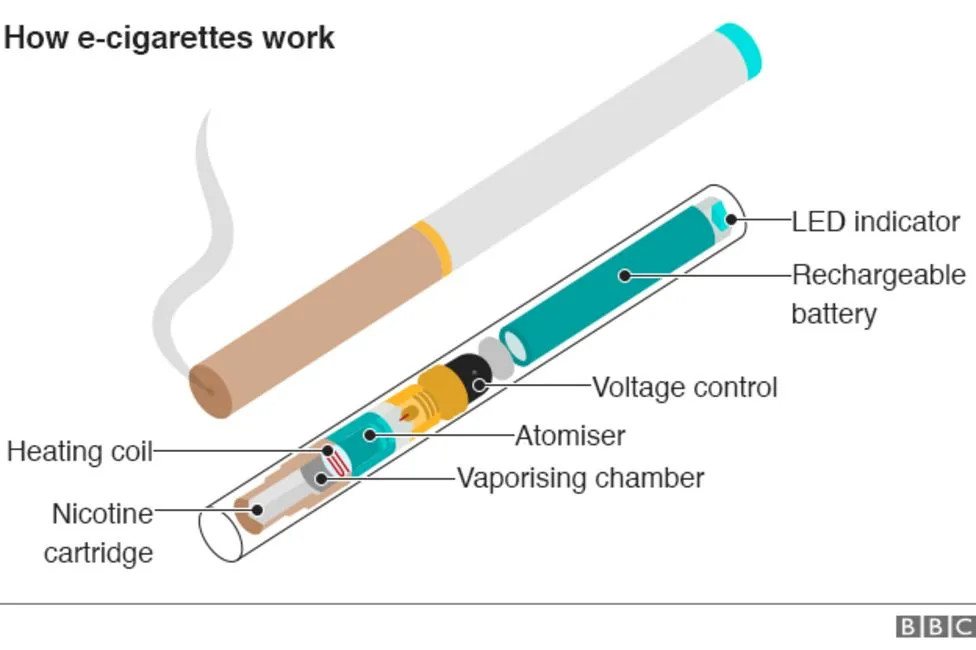
Most e-cigarettes consist of four different components, including:
- a cartridge or reservoir or pod, which holds a liquid solution (e-liquid or e-juice) containing varying amounts of nicotine, flavourings, and other chemicals,
- a heating element (atomiser),
- a power source (usually a battery),
- a mouthpiece that the person uses to inhale 12.
In many e-cigarettes, puffing activates the battery-powered heating device, which vapourises the liquid in the cartridge. The person then inhales the resulting aerosol or vapour (called vaping) 12.
When it comes to e-liquids, they typically contain propylene glycol (PG), vegetable glycerin (VG), flavourings, and nicotine. The UK’s Medicines and Healthcare products Regulatory Agency (MHRA) regulates the sale of e-liquids to ensure that they are safe for consumers.
A study published in the journal “Science” demonstrated that e-cigarette aerosol contains ultrafine particles, which can be harmful to the respiratory system 13. These particles can penetrate deep into the lungs and potentially cause inflammation and oxidative stress 14.
- The base solvents – propylene glycol and vegetable glycerine – are considered relatively inert when ingested in food, but heating them produces a different story. When propylene glycol and glycerine are heated to a certain temperature, they produce harmful organic compounds including formaldehyde, acetaldehyde, and acrolein, classified by the International Agency for Research on Cancer (IARC) as Class 1, 2B, and 2A carcinogens respectively 15.
- Heavy metals are also a documented concern. Heavy metals including cadmium, lead, and arsenic are carcinogenicsomething that tends to produce cancer. More and can increase the risk of lung cancer if inhaled repeatedly. E-cigarettes also contain acrylamide, a volatile organic compound deemed “probably carcinogenic” by the National Toxicology Program, as well as the herbicide acrolein, also considered “probably carcinogenic” 16.
- Aerosols from disposable e-cigarettes in particular have been found to contain at least 35 different elements or metals, many of which are not found in traditional cigarette smoke, including aluminium, manganese, and antimony. During a NIOSH health hazard evaluation of a vape shop, airborne formaldehyde concentration was found to be as high as 31 ppb 17.
- The flavouring chemicals – of which there may be over 20,000 varieties on the market – introduce further unknowns. While concentrations of most toxiccapable of causing injury or death compounds are generally lower than in conventional cigarettes, caution is warranted, as studies have detected benzene, carbon monoxide, and heavy metals such as lead and arsenic in e-cigarette aerosols, albeit at lower concentrations compared to traditional cigarettes. Lower, however, does not mean zero 18.
An article in The Guardian newspaper stated that “One in six vapes confiscated in English schools are spiked with the highly addictive “zombie drug” spice, according to research.
Analysis from 38 schools revealed that the synthetic street drug, classified as class B alongside ketamine and GHB, was in nearly 100 devices. The researchers said they believed the substance was being put into vapes marketed as containing cannabis oil. The drug, which can cause heart attacks, seizuresthe outward effect can vary from uncontrolled jerking movement (tonic-clonic seizure) to as subtle as a momentary loss of awareness More and psychoticthis is a mental state when you see or hear things which aren't there and have delusions More episodes, was found in 16.6% of vapes tested, while roughly one in 100 contained THCTHC, or tetrahydrocannabinol, is the chemical responsible for most of marijuana's psychological effects, the psychoactive component of cannabis. One vape tested contained trace elements of heroin” 19.
Mode of use
The role of nicotine-free vape pens in quitting cigarettes
Many individuals turn to nicotine-free e-cigarettes to quit smoking, believing them to be safer. However, the FDAUS Food and Drug Administration has not approved vape pens as a smoking cessation tool, and research indicates they may be just as harmful as tobacco.
A 2021 survey found that over 2 million US high and middle school students have used e-cigarettes, with other studies revealing that many users also smoke traditional tobacco products.
Those using e-cigarettes to reduce smoking may inadvertently expose themselves to harmful chemicals and unregulated nicotine levels. More secure nicotine replacement therapies, such as patches and gums, provide controlled nicotine doses, helping people quit without experiencing severe withdrawal symptoms 6.
Effects
While vaping shows some promise for quitting smoking, it comes with its own health risks, according to NIDA. These include breathing issues, lung illnesses and injuries, and issues with brain development during the teen years.
“Nicotine affects concentration and brain development, which continues into your mid-20s,” Garfield said.
“One of the biggest concerns I have with e-cigarettes is… they created another generation of nicotine addiction. That’s really where I have such a problem in supporting them in any way,” Garfield added.
NIDA states that some evidence reveals vaping may actually prompt teenagers to try smoking cigarettes. However, a recent study published in the Nicotine & Tobacco Research journal showed the use of traditional cigarettes wasn’t significantly higher among adolescent vapers than among non-vapers 7.
Harmful Effects
In recent years, more and more people have been vaping as a replacement for smoking. In many cases, it has been very effective in helping consumers transition from traditional cigarettes to a vapour-based alternative, giving them their nicotine fix without the harmful physical effects of inhaling smoke.
E-cigarettes were designed not to contain as many chemicals as traditional cigarette smoke, but most people don’t realise that the product is not entirely safe. Also, different vape liquids have different ingredients that users may or may not pay attention to. Here are some of the most common harmful effects of vaping:
- Can worsen asthma and other lung conditions: vaping can worsen existing asthma, increase the risk of suffering from asthma, and increase the risk of other lung conditions.
- Could cause permanent lung scarring: diacetyl (a flavouring ingredient) can cause “popcorn lung,” which can cause lung tissue to scar and thicken permanently.
- Increased risk of heart and brain damage: some e-cigarettes contain nicotine, which is known to hurt brain development in young people and raise blood pressure.
- Higher risk of addiction: due to the presence of nicotine and other substances.
- Increased risk of cancer: some ingredients might be associated with cancer, especially after long-term use.
- This may lead to smoking traditional cigarettes: vaping is associated with smoking later on 5.
The dangers of vaping for adults and adolescents are profound and can’t be overstated. According to the Centers for Disease Control and Prevention (CDC), some dangers worth noting include:
- According to a CDC study, the vast majority (99 percent) of e-cigarettes sold in assessed venues in the U.S. contain nicotine, and even those that are marketed as being nicotine-free have been found to have nicotine. Vape products also may not disclose that they have nicotine.
- Fires and explosions have happened with defective e-cigarette batteries, which may lead to injuries, including serious ones.
- Adolescents and adults may be poisoned if they swallow, breathe or absorb the liquid in e-cigarettes through the skin or eyes.
- Many adolescents who use e-cigarette products also smoke cigarettes.
- Using nicotine products during the adolescent years may be linked to a raised risk of addiction to other drugs in the future.
- E-cigarettes may also be used to use other drugs, such as marijuana 7
Vapes are relatively new compared to cigarettes, so we are yet to see all the long-term effects vaping may have on the body
(It took decades before some of the long-term effects of smoking became evident).
What we know now is that vaping can harm the lungs, brain, teeth and gums.
Here’s what we know about how vaping effects the body.
Lungs
Brain
Many vapes contain high concentrations of nicotine, even if it doesn’t say so on the label. This high level of nicotine causes seizuresthe outward effect can vary from uncontrolled jerking movement (tonic-clonic seizure) to as subtle as a momentary loss of awareness More in some people who vape 20. Nicotine harms the way a teenage brain grows, which may affect memory and concentration 21.
Teeth & gums
Vaping may harm the teeth and gums. People who vape are more likely to have gum disease (periodontitis), which leads to tooth loss 22, 23. A 2025 systematic review and meta-analysis from the University of Gothenburg found that e-cigarette users may have a higher prevalence of dental caries compared with non-smokers. E-cigarette aerosol exposure favours the growth and colonisation of harmful oral bacteria such as Streptococcus mutans compared to commensal (healthy) streptococci 24.
E-cigarettes have been linked to teeth discolouration and dental caries, and they promote the development of periodontal diseases as well as causing oral mucosa lesions, including oral cancer. E-cigarette aerosols may negatively affect the oral microbiome by suppressing the growth of commensal bacteria and increasing populations of bacteria responsible for numerous oral disorders. The most visible discolouration effect was observed when enamel was exposed to menthol- and tobacco-flavoured e-liquids. E-cigarettes also affect periodontal health – gum bleeding is the first symptom of periodontal disease. However, one meta-analysis noted that smokers of conventional cigarettes had poorer clinical periodontal outcomes than e-cigarette users, suggesting a relative (not absolute) harm reduction in this specific domain 25.
Pregnancy & developing baby
Heart & cardiovascular system
Fire & safety risks
Vapes can explode or catch fire. Burns and injuries from vapes can be fatal. Burns and injuries most commonly occur on faces, hands, and around the genitals (when vapes are kept in pockets). Some people have died from head wounds from exploding vapes. Vapes can also cause small and large fires, and therefore injury 20.
Poisoning risk
The high levels of nicotine in vapes make the vape liquid dangerous. E-liquids are poisonous if swallowed, spilt on the skin, or if it gets in the eyes. Nicotine poisoning causes seizuresthe outward effect can vary from uncontrolled jerking movement (tonic-clonic seizure) to as subtle as a momentary loss of awareness More that can be fatal 20, 28. There have been many accidental poisonings of children under the age of six 20.
Increased likelihood of smoking
There is strong evidence that vaping approximately triples the chance that someone will start smoking tobacco cigarettes, putting them at risk of all the health harms associated with smoking 20. This may be caused by vapes creating nicotine addiction and normalising smoking behaviours 21.
Short-term effects
- Nicotine: E-cigarettes deliver nicotine, which is highly addictive and can cause increased heart rate, increased blood pressure, and quicker breathing 29.
- Throat and mouth irritation: E-cigarette use can lead to dry mouth, sore throat, coughing, and irritation of the lips, tongue, and gums 30.
- Chemical exposure: E-liquids contain a variety of chemicals such as propylene glycol, vegetable glycerin, flavourings, and sometimes nicotine. Some of these chemicals have been shown to cause respiratory issues when inhaled 30.
- Popcorn lung: Diacetyl, a chemical used in e-liquid flavouring, has been linked to a lung disease called ‘bronchiolitis obliterans’, also known as “popcorn lung” because it was first identified among workers in a popcorn factory 30.
- Toxiccapable of causing injury or death metals: E-cigarettes can release toxiccapable of causing injury or death metals such as nickel, tin, and lead into the vapour, especially when low-quality devices are used or when users take long puffs 31.
- Heart disease: Some studies suggest that e-cigarette use may increase the risk of heart disease by damaging the endothelial cells lining the arteries 32.
Long-term effects
Risk of cancer
Due to the short time that vapes have been around, their long-term health effects are not known. Health organisations are concerned that long-term use of vapes might cause cancer because:
- There are chemicals found in vapes that are known causes of cancer. These include acrolein, arsenic, benzene, benzo[a]pyrene, cadmium, formaldehyde, styrene, and toluene 33.
- In people who vape, there are signs of cell damage and of a higher cancer risk in the future 33.
The use of e-cigarettes has been linked to oral mucosa lesions, including oral cancer. The American Cancer Society notes that studies are starting to show a link between e-cigarette use and damage to teeth and other oral tissues, including cavities and irritation of gums, and scientists are still learning about how e-cigarettes affect health when used for long periods of time 34.
Risks
Physical health risks
Nicotine vaping is recommended by the NHSThe 'National Health Service' is the publicly funded national healthcare system in the UK. The organisation, funded primarily by taxation, provides free or low-cost healthcare to all legal residents of the UK. Medications are subsidised as well and prescriptions may be free in certain situations. More as a way for adults to stop smoking. But it isn’t recommended for non-smokers, especially children and young people under 18. Vaping is less harmful than smoking but that doesn’t mean it’s harmless. Smoking gives you nicotine by burning tobacco, which creates many harmful toxins that can cause serious illnesses including cancer, lung disease, heart disease and stroke.
Vaping gives you nicotine by heating e-liquid, which creates fewer toxins and at lower levels. In general, smokers who switch to vaping reduce their exposure to a wide range of toxiccapable of causing injury or death substances. This includes tar and carbon monoxide, very harmful compounds which are produced by cigarettes but not by vapes.
But vaping still exposes users to some toxins and we don’t yet know what the risks might be in the longer term.
Vaping drugs such as THCTHC, or tetrahydrocannabinol, is the chemical responsible for most of marijuana's psychological effects is generally less physically harmful than smoking cannabis. This is because smoking cannabis creates harmful toxins that can cause serious diseases such as cancer, lung disease, heart disease and stroke. Vapes are only less harmful if they have not been prepared with any other harmful substance. There is no way for you to know whether a “THC” vape has, as it won’t have gone through quality controls, like legal nicotine vapes do 35.
The CDC considers youth vape usage an “epidemic.” However, e-cigarettes are harmful to more than just minors and pregnant individuals. While there’s limited research on the effects of vaping liquid on the human body compared to tobacco, available studies show alarming results:
- Poor lung health and respiratory function. Severe lung damage related to vaping, known as e-cigarette, ‘Vaping Use-Associated Lung Injury’, or EVALI, has been linked to over 60 recorded deaths. The chemicals and heat involved in vapourising e-liquids can cause life-threatening injuries to the lungs and airways, inflammation, and fluid build-up. Survivors may suffer from permanent lung damage. Symptoms of EVALI include coughing, shortness of breath, chest pain, nausea, vomiting, and diarrhoeaWhere you frequently pass watery or loose faeces. Some cases have required hospitalisation 36
- Chronic inflammation and lung scarring. A 2015 study found that even a single use of nicotine-free e-cigarettes containing propylene glycol and glycerol can irritate the airways. Repeated exposure can gradually deteriorate throat and lung tissues, potentially causing permanent scarring.
- Cell damage. Certain combinations of the chemicals found in vapes can form formaldehyde to be absorbed into the body, considerably raising the users’ risk of developing cancer 6.
Mental health risks
Nicotine is an addictive substance which can be hard to stop using once you’ve started. Also, nicotine may be riskier for young people than for adults – there’s some evidence that in adolescence the brain is more sensitive to its effects. Nicotine is a toxin, and poisoning can happen if larger doses are taken.
Vaping cannabis chemicals has the same mental health risks as other cannabis products. Vaping other drugs has the same mental health risks as using those drugs in other form.
Nicotine vaping products are covered by regulations to protect users, including maximum nicotine strength and bans on certain ingredients. But some disposable vapes on sale are illegal and don’t meet UK quality and safety regulations. They might look like the real thing, but they aren’t so it isn’t possible to know what’s actually in them. Non-nicotine vapes are not covered by the same regulations as nicotine vapes and are not without risk 4.
Vaping Among Teens
Vaping devices are popular among teens and are now the most commonly used form of nicotine among youth in the United States. Some research shows that many teens do not even realise that vaping cartridges contain nicotine, and assume the pods contain only flavouring. The easy availability of these devices, alluring advertisements, various e-liquid flavours, and the belief that they’re safer than cigarettes have helped make them appealing to this age group. In addition, they are easy to hide from teachers and parents because they do not leave behind the stench of tobacco cigarettes, and are often disguised as flash drives. Further, a study of high school students found that one in four teens reported using e-cigarettes for dripping, a practice in which people produce and inhale vapours by placing e-liquid drops directly onto heated atomiser coils. Teens reported the following reasons for dripping: to create thicker vapour (63.5 percent), to improve flavours (38.7 percent), and to produce a stronger throat hit – a pleasurable feeling that the vapour creates when it causes the throat to contract (27.7 percent) 37. More research is needed on the risks of this practice.
In addition to the unknown health effects, early evidence suggests that vaping might serve as an introductory product for preteens and teens who then go on to use other nicotine products, including cigarettes, which are known to cause disease and premature death. A study showed that students who had used e-cigarettes by the time they started 9th grade were more likely than others to start smoking cigarettes and other smokable tobacco products within the next year 38. Another study supports these findings, showing that high school students who used e-cigarettes in the last month were about 7 times more likely to report that they smoked cigarettes when asked approximately 6 months later, as compared to students who said they didn’t use e-cigarettes. Notably, the reverse was not true – students who said they smoked cigarettes were no more likely to report use of e-cigarettes when asked approximately 6 months later. Like the previous study, these results suggest that teens using e-cigarettes are at a greater risk for smoking cigarettes in the future 39. Another study has shown an association between e-cigarette smoking and progression to smoking actual cigarettes 40. This study suggests that vaping nicotine might actually encourage cigarette smoking in adolescents.
Additionally, a study of adult smokers in Europe found those who vaped nicotine were less like to have stopped smoking than those who did not. Those who used e-cigarettes also smoked more cigarettes than those who didn’t 41. In another study of more than 800 people who said they vaped to help them quit traditional cigarette smoking, only nine percent reported having quit when asked a year later 42. However, more research is still needed to understand if experimenting with e-cigarettes leads to regular use of smokable tobacco.
Under U.S. Food and Drug Administration (FDAUS Food and Drug Administration) regulations designed to protect the health of young Americans, minors can no longer buy e-cigarettes in stores or online (see “Government Regulation of E-cigarettes”). The FDAUS Food and Drug Administration now regulates the manufacture, import, packaging, labelling, advertising, promotion, sale, and distribution of e-cigarettes. This includes components and parts of e-cigarettes but excludes accessories 43, 2.
What are the health effects of vaping? Is it safer than smoking tobacco cigarettes?
Research so far suggests that vaping devices might be less harmful than combustible cigarettes when people who regularly smoke switch to them as a complete replacement. But nicotine in any form is a highly addictive drug. Research suggests it can even prime the brain’s reward system, putting vapers at risk for addiction to other drugs 44.
Also, e-cigarette use exposes the lungs to a variety of chemicals, including those added to e-liquids, and other chemicals produced during the heating/vapourising process 45. A study of some e-cigarette products found the vapour contains known carcinogens and toxiccapable of causing injury or death chemicals, as well as potentially toxiccapable of causing injury or death metal nanoparticles from the device itself. The study showed that the e-liquids of certain cig-a-like brands contain high levels of nickel and chromium, which may come from the nichrome heating coils of the vapourising device. Cig-a-likes may also contain low levels of cadmium, a toxiccapable of causing injury or death metal also found in cigarette smoke that can cause breathing problems and disease 46. More research is needed on the health consequences of repeated exposure to these chemicals. There are also reports of lung illnesses and deaths related to inhalation of certain vaping oils into the lungs, which have no way to filter out toxiccapable of causing injury or death ingredients 2.
Reports of Deaths Related to Vaping
The Food and Drug Administration has alerted the public to thousands of reports of serious lung illnesses associated with vaping, including dozens of deaths. They are working with the Centers for Disease Control and Prevention (CDC) to investigate the cause of these illnesses. Many of the suspect products tested by the states or federal health officials have been identified as vaping products containing THCTHC, or tetrahydrocannabinol, is the chemical responsible for most of marijuana's psychological effects, the main psychotropic ingredient in marijuana. Some of the patients reported a mixture of THCTHC, or tetrahydrocannabinol, is the chemical responsible for most of marijuana's psychological effects and nicotine; and some reported vaping nicotine alone. While the CDC and FDAUS Food and Drug Administration continue to investigate possible other contributing substances, CDC has identified a thickening agent – Vitamin E acetate – as a chemical of concern among people with e-cigarette or vaping associated lung injuries. They recommend that people should not use any product containing Vitamin E acetate, or any vaping products containing THCTHC, or tetrahydrocannabinol, is the chemical responsible for most of marijuana's psychological effects; particularly from informal sources like friends, family, or in-person and online dealers. They also warn against modifying any products purchased in stores, or using any vaping products bought on the street. People, including health professionals, should report any adverse effects of vaping products. The CDC has posted an information page for consumers 2.
Health Effects for Teens
The teen years are critical for brain development, which continues into young adulthood. Young people who use nicotine products in any form, including e-cigarettes, are uniquely at risk for long-lasting effects. Because nicotine affects the development of the brain’s reward system, continued nicotine vaping can not only lead to nicotine addiction, but it also can make other drugs such as cocaine and methamphetamine more pleasurable to a teen’s developing brain 35.
Nicotine also affects the development of brain circuits that control attention and learning. Other risks include mood disorders and permanent problems with impulse control – failure to fight an urge or impulse that may harm oneself or others 2, 35.
Vaping Safety Measures
While vaping poses a smaller risk to your health than cigarettes, it’s still not entirely safe. However, you can take some safety measures if you are in the process of quitting or if you have not yet decided to quit.
- Avoid vaping products that contain THCTHC, or tetrahydrocannabinol, is the chemical responsible for most of marijuana's psychological effects (the psychoactive ingredient in cannabis).
- Don’t obtain vaping devices from friends, family, or untrustworthy online dealers.
- Only use substances that the manufacturer intended. Don’t add any foreign substances to your devices.
- Keep your devices and vaping products away from pets and children.
- Keep the e-liquid away from your skin. The concentrated nicotine may cause side effects if it touches it.
- Immediately stop using a vape if you feel dizzy, nauseous, or sick 5.
- Sharing vaping devices can spread COVID-19 47. Several organisations, including Purdue University and Public Health England (PHE), strongly advise against sharing vapes 48, 49, 50.
Addiction
Can you get addicted?
Nicotine is an addictive substance, and you can become dependent on vapes, especially if you vape nicotine regularly.
Giving up nicotine can be difficult because the body has to get used to functioning without it. Withdrawal symptoms can include cravings, irritability, anxiety, trouble concentrating, headaches and other mental and physical symptoms.
Vaping THCTHC, or tetrahydrocannabinol, is the chemical responsible for most of marijuana's psychological effects is addictive in the same way as cannabis, and the same goes for other drugs 4.
Many vapes contain nicotine (even if they aren’t labelled that way) which is highly addictive. Teens become more easily and rapidly addicted to nicotine than adults 51, 52. Being addicted to nicotine can make you feel like vaping is controlling you and can impact your daily life.
Legality
In the UK it is illegal to sell nicotine vaping products to someone under the age of 18, or for adults to buy these products for them. Any drug that is contained in a vape has the same legal status as in other forms.
THCTHC, or tetrahydrocannabinol, is the chemical responsible for most of marijuana's psychological effects and synthetic cannabinoids, like cannabis, are Class B drugs, which means they’re illegal to have for yourself, give away or sell.
CBDcannibidiol More is a legal substance, and CBDcannibidiol More vapes are sold legally in the UK, but if you buy it from an illicit supplier, it could have other illicit drugs in it 4.
According to the UK Government’s official website 53, “Electronic cigarettes (e-cigarettes) are not completely risk free but are likely to be less harmful than smoking tobacco.” The Tobacco and Related Products Regulations 2016 govern their use, sale, and marketing within the UK.
In the UK, e-cigarettes are regulated under the Tobacco and Related Products Regulations (TRPR), which came into effect in 2016. The TRPR classifies e-cigarettes as medicinal products unless they meet specific criteria, such as being designed for cessation support or containing nicotine strengths above a certain threshold. As a result, the sale of e-liquids with high nicotine concentrations is restricted, and marketing towards young people is prohibited. Another important consideration is the marketing and advertising of e-cigarettes, which can have significant public health implications. In the UK, restrictions on advertising are stricter than other countries, with more limited opportunities for product promotion. This could potentially reduce youth exposure to e-cigarette advertisements and help mitigate the risk of young people starting to use these products.
In the UK specifically, diacetyl is banned from legal e-liquids, and the Medicines and Healthcare products Regulatory Agency (MHRA) and Trading Standards enforce the Tobacco and Related Products Regulations 2016. Nevertheless, EVALI can still occur if people use unregulated vape liquids, and unregulated disposable devices – particularly those of Chinese origin – continue to circulate widely 54.
US Government Regulation of E-cigarettes
In 2016, the FDAUS Food and Drug Administration established a rule for e-cigarettes and their liquid solutions. Because e-cigarettes contain nicotine derived from tobacco, they are now subject to government regulation as tobacco products. In December 2019, the federal government raised the legal minimum age of sale of tobacco products from 18 to 21 years, and in January 2020, the FDAUS Food and Drug Administration issued a policy on the sale of flavoured vaping cartridges 2.
Several US states, including Michigan, New York, and Massachusetts, have attempted to impose bans and restrictions on the sale of flavoured vape pens, both with and without nicotine. However, these initiatives have faced substantial legal opposition from manufacturers and industry groups.
Nonetheless, there are extensive state-wide regulations on e-cigarettes:
- All 50 states, along with the District of Columbia, Guam, the Northern Mariana Islands, Palau, Puerto Rico, and the U.S. Virgin Islands, prohibit the sale of e-cigarettes to underage individuals.
- Over 30 states require a retail license to sell e-cigarettes.
- Seventeen states, the District of Columbia, and Puerto Rico have banned smoking e-cigarettes in indoor areas of private worksites, restaurants, and bars.
- Almost all states impose taxes on e-cigarettes, calculated per milliliter of liquid or based on a percentage of a specified cost 6.
Vaping laws in Australia
Australia-wide law restricts the sale of vapes. It aims to make it harder for people to sell vapes, especially those with flavours that have been marketed to appeal to children and teenagers. Pharmacies can sell vapes to help people quit smoking.
Vaping is not allowed in workplaces or public places that are smoke-free 11
Mixing
Is it dangerous to mix with other drugs?
Mixing drugs is always risky but some mixtures are more dangerous than others.
Harm Reduction
Vaping and smoking cessation:
- Using a vaping product is the most popular aid used by people trying to quit smoking. In 2020, 27.2% of people used a vaping product in a quit attempt in the previous 12 months. This compares with 15.5% who used NRT over the counter or on prescription (2.7%), and 4.4% who used varenicline.
- Vaping is positively associated with quitting smoking successfully. In 2017, over 50,000 smokers stopped smoking with a vaping product who would otherwise have carried on smoking.
- Prescription medication and licensing NRT for harm reduction were also positively associated with successfully quitting smoking. This shows how important it is for people who smoke to have access to a wide choice of cessation aids.
- The extensive use of vaping products in quit attempts compared with licensed medication suggests vaping products may reach more people who smoke and so have more impact than NRT and varenicline.
- In April 2023 the government announced a new ‘Swap to stop’ scheme where 1 in 5 smokers in England will be given a vape starter kit and behavioural support to help them quit 1
Overcoming vaping addiction
Vaping and tobacco addictions are not that different from most other addictions. The tricky part comes in the form of social acceptance. Since vaping and smoking are highly socially acceptable, it can be hard even to recognise you have a problem – especially for younger vapers.
Interventions like taking advice from a healthcare worker or reading informational materials can be an excellent first step toward treatment. There are also FDA-approved medications to help with tobacco addiction, such as bupropion and varenicline. There are no FDA-approved medications specifically for vaping, though. Medications used for tobacco may help vapers, but there’s no solid evidence.
For most addictions, a combination of medication and behavioural therapy is proven very effective for recovery. If you think you are addicted to vaping or smoking, seek help, and your GPGeneral Practitioner, a community-based doctor in the UK will provide you with a recovery plan 5.
History
The first e-cigarettes entered the Chinese market in 2003, rapidly gaining popularity in their home country and expanding to other continents in the following years. In 2011, there were an estimated 7 million adult users worldwide, but by 2020 that number had grown to 68 million, and 82 million in 2021. In 2022, about 1 in 10 or more than 2.5 million U.S. middle and high school students currently use e-cigarettes.
Other vital statistics include the following:
- 14.1% (2.14 million) of high school students and 3.3% (380,000) of middle school students reported current e-cigarette use.
- Nearly 85% of users prefer fruit-flavoured vapes.
- Over 4 in 10 youth e-cigarette users report using them at least 20 of the last 30 days.
Vaping among children, teenagers, and young adults has generated particular controversy. According to the CDC, vaping is harmful to them, and most e-cigarettes contain nicotine, which is highly addictive and may harm brain development until the mid-20s.
Additionally, younger people who vape have a higher chance of eventually smoking traditional cigarettes 5.
Points to Remember
- People vape with battery-operated devices used to inhale an aerosol, which can contain nicotine, marijuana, flavourings, and other chemicals. In many e-cigarettes, puffing activates the battery-powered heating device, which vapourises the liquid in the cartridge or reservoir. The person then inhales the resulting aerosol or vapour (called vaping).
- Vaping is popular among teens. Under U.S. Food and Drug Administration (FDAUS Food and Drug Administration) regulations designed to protect the health of young Americans, minors can no longer buy e-cigarettes in stores or online.
- Nicotine stimulates the adrenal glands to release the hormone adrenaline and increases the levels of a chemical messenger in the brain called dopamine. Pleasure caused by nicotine’s interaction with the brain’s reward system motivates some people to use nicotine again and again, despite possible risks to their health and well-being.
- Research so far suggests that vaping is less harmful than combustible cigarettes when people who regularly smoke switch to them as a complete replacement. But e-cigarettes can still damage a person’s health.
- Vaping can lead to nicotine addiction and increased risk for addiction to other drugs.
- Vaping also exposes the lungs to a variety of chemicals, including those added to e-liquids, and other chemicals produced during the heating/vapourising process.
- More research is needed to determine if vaping nicotine can be as effective as smoking cessation aids already approved by the FDAUS Food and Drug Administration 2.
Footnotes:
E-cigarettes and vaping, 2025, https://www.drugwise.org.uk/e-cigarettes/
Vaping Devices (Electronic Cigarettes) DrugFacts, 2020, https://nida.nih.gov/publications/drugfacts/vaping-devices-electronic-cigarettes
Zhu S-H, Sun JY, Bonnevie E, et al. Four hundred and sixty brands of e-cigarettes and counting: Implications for product regulation. Tob Control. 2014; 23 Suppl 3:iii3-iii9. https://doi.org/10.1136/tobaccocontrol-2014-051670
Vapes, 2026, https://www.talktofrank.com/drug/vapes
Is Vaping Safe?, 2026, https://addictiontreatmentmagazine.com/is-vaping-safe/
The Reality of “Nicotine-Free” Vape Pens, 2026, https://addictiontreatmentmagazine.com/the-reality-of-nicotine-free-vape-pens/
Kirstie Ganobsik, Is Vaping Any Healthier Than Smoking? 2023, https://www.healthday.com/a-to-z-health/public-health/is-vaping-any-healthier-than-smoking-2659388555.html
Statista, Number of e-cigarette users in the United Kingdom 2012-2021, 2021, https://www.statista.com/statistics/875933/number-of-e-cigarette-users-in-the-united-kingdom/
Thomson, G., et al., A cross-sectional study of the impact of e-cigarettes on lung function in young adult never smokers and experimenters. BMJ Open Respiratory Research, 2016, 3(1), e000084. doi: 10.1136/bmjresp-2015-000084
Public Health England, E-cigarettes and heated tobacco products 2018: a rapid evidence update, 2019, https://assets.publishing.service.gov.uk/government/uploads/system/uploads/attachment_data/file/764530/E-cigarettes_and_heated_tobacco_products_2018_-_a_rapid_evidence_update.pdf
What is vaping? 2025, https://www.quit.org.au/en/why-quit/what-is-vaping
Vaping Devices (Electronic Cigarettes) DrugFacts, 2020, https://nida.nih.gov/publications/drugfacts/vaping-devices-electronic-cigarettes
Dugard, A., et al. Aerosol Characterization of Three Electronic Cigarettes Using a Collocated Ultrafine Particle Counter and Breathable Condensation Nuclei Counter, 2015, Environmental Science & Technology, 49(13), 7684-7692.
Pope, C. A., III, & Dockery, D. W., Health effects of fine particulate air pollution: Lines that connect, 2006, Journal of the American Medical Association, 295(1), 70-73.
Anna Bawden, One in six vapes confiscated at English schools spiked with ‘zombie drug’, https://www.theguardian.com/society/article/2024/jul/25/one-in-six-vapes-confiscated-at-english-schools-spiked-with-zombie-drug
Banks E, Yazidjoglou A, Brown S, Nguyen M, Martin M, Beckwith K, Daluwatta A, Campbell S, and Joshy G. Electronic cigarettes and health outcomes: systematic review of global evidence. 2022, Report for the Australian Department of Health. Canberra: National Centre for Epidemiology and Population Health.
Greenhalgh EM, and Scollo MM. Effects of e-cigarette use on smoking. In Greenhalgh, EM, Scollo, MM and Winstanley, MH [editors]. Tobacco in Australia: Facts and issues. Melbourne: Cancer Council Victoria; 2023. Available from: https://www.tobaccoinaustralia.org.au/chapter-18-e-cigarettes/18-7-effects-of-e-cigarette-use-on-smoking
Atuegwu NC, Perez MF, Oncken C, Thacker S, Mead EL, et al. Association between regular electronic nicotine product use and self-reported periodontal disease status: Population Assessment of Tobacco and Health Survey. International Journal of Environmental Research and Public Health, 2019; 16(7). doi: 10.3390/ijerph16071263. – https://www.ncbi.nlm.nih.gov/pubmed/30970567
Chaffee BW, Lauten K, Sharma E, Everard CD, Duffy K, et al. Oral health in the Population Assessment of Tobacco and Health Study. Journal of Dental Research, 2022; 101(9): 1046-54. doi: 10.1177/00220345221086272. – https://pubmed.ncbi.nlm.nih.gov/35403466/
Frontiers in Oral Health, 2025, https://www.ncbi.nlm.nih.gov/pmc/articles/PMC12021849/
Dental Journal (Basel) / PMC, December 2024, https://www.ncbi.nlm.nih.gov/pmc/articles/PMC11675017/
Bell L, Whelan M, Thomas L, Edwards E, Lycett D, Hayward K, Wilson K, Harrison R, Patel R. U*se of e-cigarettes in pregnancy: A systematic review of evidence published from 2020-2022*. Journal of Public Health. 2023; 26: 1-4. https://link.springer.com/article/10.1007/s10389-023-02026-9
Shittu AAT, Kumar BP, Okafor U, Berkelhamer SK, Goniewicz ML, et al. Changes in e-cigarette and cigarette use during pregnancy and their association with small-for-gestational-age birth. American Journal of Obstetrics and Gynecology, 2022; 226(5): 730.e1-730.e10. doi: 10.1016/j.ajog.2021.11.1354. – https://www.ncbi.nlm.nih.gov/pubmed/34864040
QUIT. The dangers of nicotine in vaping liquid; 2024, https://www.quit.org.au/articles/dangers-liquid-nicotine
Mayo Clinic, Nicotine addiction, 2022, https://www.mayoclinic.org/diseases-conditions/nicotine-addiction/symptoms-causes/syc-20374586
CDC, Electronic Cigarettes (E-Cigarettes) and Other Electronic Nicotine Delivery Systems (ENDS): What You Need To Know, 2018, https://www.cdc.gov/tobacco/basic_information/e-cigarettes/
Farsalinos, K., et al., Health Risks of Electronic Cigarettes: An Updated Systematic Review. Journal of Aerosol Medicine and Pulmonary Drug Delivery, 2014, 27(2), 93-106.
Rabe, K., et al., Harmful and potentially harmful constituents in electronic cigarette vapor: a systematic review. Therapeutic Advances in Respiratory Disease, 2018, 10, 15-37.
Winnall W, Greenhalgh EM, and Scollo MM. 18.6.0 Introduction. In Greenhalgh, EM, Scollo, MM and Winstanley, MH [editors]. Tobacco in Australia: Facts and issues. Melbourne: Cancer Council Victoria; 2023. – https://www.tobaccoinaustralia.org.au/chapter-18-e-cigarettes/18-6-the-health-effects-of-e-cigarette-use
American Cancer Society, 2024, https://www.cancer.org/cancer/risk-prevention/tobacco/e-cigarettes-vaping.html
U.S. Department of Health, and Human Services, Centers for Disease Control and Prevention, National Center for Chronic Disease, Prevention and Health Promotion, Office on Smoking and Health. E-Cigarette Use Among Youth And Young Adults: A Report of the Surgeon General – Executive Summary. 2016. https://e-cigarettes.surgeongeneral.gov/documents/2016_SGR_Exec_Summ_508.pdf.
Outbreak of Lung Injury Associated with the Use of E-Cigarette, or Vaping, Products, 2020, https://www.cdc.gov/tobacco/basic_information/e-cigarettes/severe-lung-disease.html
Krishnan-Sarin S, Morean M, Kong G, et al. E-Cigarettes and “dripping” among high-school youth. Pediatrics. 2017; 139(3). doi: https://doi.org/10.1542/peds.2016-3224
Leventhal AM, Strong DR, Kirkpatrick MG, et al. Association of electronic cigarette use with initiation of combustible tobacco product smoking in early adolescence. JAMA. 2015;314(7):700-707. https://doi.org/10.1001/jama.2015.8950
Bold KW, Kong G, Camenga DR, et al. Trajectories of e-cigarette and conventional cigarette use among youth. Pediatrics. December 2017:e20171832. https://doi.org/10.1542/peds.2017-1832
Chaffee BW, Watkins SL, Glantz SA. Electronic cigarette use and progression from experimentation to established smoking. Pediatrics. March 2018:e20173594. https://doi.org/10.1542/peds.2017-3594
Kulik MC, Lisha NE, Glantz SA. E-cigarettes associated with depressed smoking cessation: A cross-sectional study of 28 European Union countries. Am J Prev Med. 2018;54(4):603-609. https://doi.org/10.1016/j.amepre.2017.12.017
Weaver SR, Huang J, Pechacek TF, Heath JW, Ashley DL, Eriksen MP. Are electronic nicotine delivery systems helping cigarette smokers quit? Evidence from a prospective cohort study of U.S. adult smokers, 2015–2016. PLOS ONE. 2018;13(7):e0198047. https://doi.org/10.1371/journal.pone.0198047
Products C for T. Products, Ingredients & Components – Vaporizers, E-Cigarettes, and other Electronic Nicotine Delivery Systems (ENDS). https://www.fda.gov/tobacco-products/products-ingredients-components/e-cigarettes-vapes-and-other-electronic-nicotine-delivery-systems-ends. Accessed April 17, 2017.
Levine A, Huang Y, Drisaldi B, et al. Molecular mechanism for a gateway drug: Epigenetic changes initiated by nicotine prime gene expression by cocaine. Sci Transl Med. 2011;3(107):107ra109. https://doi.org/10.1126/scitranslmed.3003062
Sleiman M, Logue JM, Montesinos VN, et al. Emissions from electronic cigarettes: Key parameters affecting the release of harmful chemicals. Environ Sci Technol. 2016;50(17):9644-9651. https://doi.org/10.1021/acs.est.6b01741
Hess CA, Olmedo P, Navas-Acien A, Goessler W, Cohen JE, Rule AM. E-cigarettes as a source of toxiccapable of causing injury or death and potentially carcinogenicsomething that tends to produce cancer. More metals. Environ Res. 2017;152:221-225. https://doi.org/10.1016/j.envres.2016.09.026
Purdue students sharing vaping devices spread COVID-19. WLFI News. Archived from the original on 2021, https://www.wlfi.com/content/news/Purdue-students-sharing-vaping-devices-spread-COVID-19-572365881.html
COVID-19: advice for smokers and vapers. GOV.UK. 2022, https://www.gov.uk/government/publications/covid-19-advice-for-smokers-and-vapers/covid-19-advice-for-smokers-and-vapers
Important reminder: Don’t share vaping devices, Protect Purdue. 2020, https://protect.purdue.edu/updates/important-reminder-dont-share-vaping-devices/
Vaping-associated pulmonary injury, 2026, https://en.wikipedia.org/wiki/Vaping-associated_pulmonary_injury
Doubeni CA, Reed G, and Difranza JR. Early course of nicotine dependence in adolescent smokers. Pediatrics, 2010; 125(6): 1127-33. doi: 10.1542/peds.2009-0238.
O’Loughlin J, DiFranza J, Tyndale RF, Meshefedjian G, McMillan-Davey E, Clarke PBS, Hanley J, and Paradis G. Nicotine-dependence symptoms are associated with smoking frequency in adolescents. American Journal of Preventive Medicine, 2003; 25(3): 219-25. doi: 10.1016/s0749-3797(03)00198-3.
E-cigarettes: a guide for local authorities, 2019, https://www.gov.uk/government/publications/e-cigarettes-a-guide-for-local-authorities
Pulmonology Advisor, 2025, https://www.pulmonologyadvisor.com/factsheets/does-vaping-cause-lung-cancer/